Gary Stewart arrived late to the honky-tonk era of country music. Unfortunately, he also left the industry too soon.
Stewart tried his luck in Nashville in the 1960s and had success as a songwriter, penning hits for artists like Billy Walker, Stonewall Jackson and Nat Stuckey. Despite his accomplishments as a writer, his own recordings failed to garner recognition, forcing him to move to Florida for a spell. He returned to the Music City in 1973 determined to make this stop a permanent one.
A cover of the Allman Brothers’ hit “Ramblin’ Man” was a fine start for Stewart, and the song charted at No. 63 on the Country chart in 1973. He delivered one of his biggest hits, “Drinkin’ Thing”, one year later as part of his album “Out of Hand”, which came out in 1975. The album was a monumental success for Stewart and gave him his only No. 1 hit, “She’s Actin’ Single (I’m Drinkin’ Doubles)”. It also drew rave reviewers from outlets like Allmusic and the Rolling Stone, which said that “With practitioners like Stewart around, honky-tonk—and rockabilly—may not be dead yet.”
The problem was Stewart, who some called “The King of Honky-Tonk”, didn’t save honky-tonk music; he just delayed its demise temporarily.
His in-between style of country and rock didn’t help things either; rock listeners heard too much twang in his songs, while country fans couldn’t get past his edgier side. He continued recording after “Out of Hand” and managed six more Top 20 songs through 1978. As the decade turned, Stewart’s popularity began to fade away.
The 1980s were incredibly rough on Stewart. His alcoholism and drug abuse took a major toll on a career that was already in need of help, which was part of the reason he only recorded five albums in that time frame. He also had to overcome the death of his son, Gary Joseph Stewart, who killed himself in 1988. His last singles hit the charts in 1989 from his album “Brand New”, with “An Empty Glass” reaching No. 64 and “Rainin’, Rainin’, Rainin’” making it to No. 77.
Stewart spent the ‘90s touring with a fairly low profile and produced two albums for Hightone Records. He gave it one last go in 2003 with a “Live at Billy Bob’s” album, which was well-received by critics. Allmusic’s review said that “Stewart’s voice has actually gotten better with age, slightly lower and full of pathos, brokenness, and sheer hell-raising abandon” and that the album “is essential for fans and serves as a more-than-worthy primer for beginners.”
Just when it looked like Stewart had proven his worth, he was gone.
Stewart lost his wife Mary Lou on November 26, 2003 after being married for 43 years. At a loss without his wife, Stewart canceled his concert appearances and struggled through the next few weeks. He shot himself on December 16, 2003, dying at the age of 59.
Stewart had a Jerry Lee Lewis-like voice and a style all his own. The problem was his type of music didn’t coincide with very many popular artists, so his following never rivaled the stars of his time. Maybe his live album could have resurrected his career and gave him the recognition his music deserved; we’ll just never know.
Today, Stewart’s music is very rarely played on the radio. “She’s Actin’ Single (I’m Drinkin’ Doubles)” is by far the most popular play, but it’s often limited to a well-informed disc jockey or a request from a true fan.
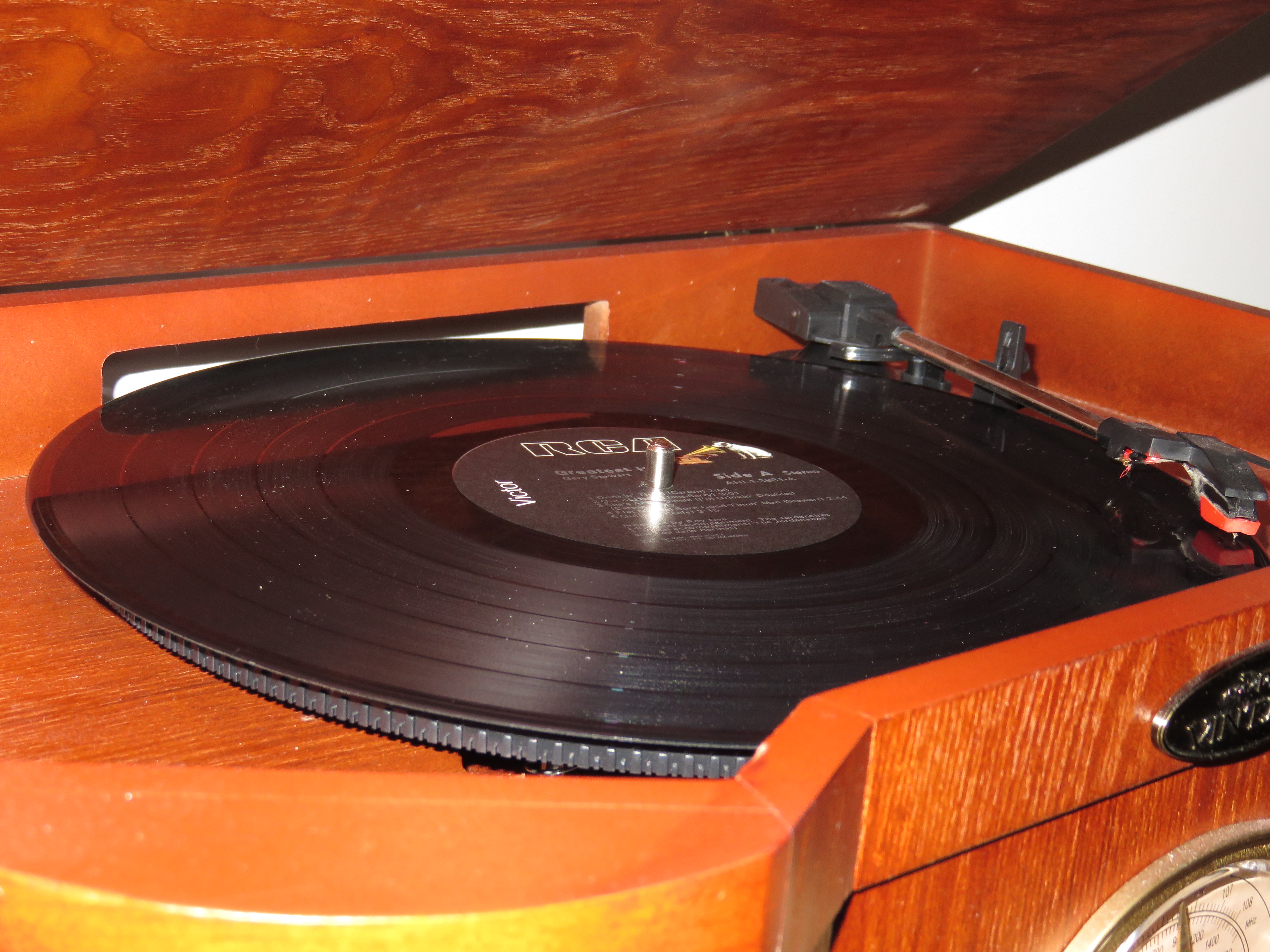
With so little recognition for his music, I decided to review his 1981 “Greatest Hits” album from RCA Records:
Found here: Wuxtry Records Side Car
Format: LP Record
Price: $1

Tracks
Side 1
Drinkin’ Thing
Out of Hand
She’s Acting Single (I’m Drinkin’ Doubles)
Flat Natural Born Good-Timin’ Man
Quits
Side 2
Ten Years of This
Whisky Trip
Single Again
Your Place or Mine
Let’s Forget That We’re Married
Best Song: “She’s Actin’ Single (I’m Drinkin’ Doubles)”. Stewart’s biggest hit, this song was the sixth track on the “Out of Hand” album and hit the top of the charts on May 10, 1975. The song is like several of Stewart’s biggest hits; it talks about a woman who is running around on a man, who drinks to cope.
It’s the same blueprint for songs like “Drinkin’ Thing” and “Whisky Trip” and is part of the reason Stewart couldn’t break out as a national star. You either liked his style or didn’t; there was truly no in between.
Ronnie Dunn, formerly of Brooks & Dunn, covered the song for the 2010 film “Country Strong“.
Best Line: “If I wait up at home, I’ll only ask her questions/She’d probably tell the truth, so I don’t even ask/So I sit here on this barstool feelin’ helpless/And wonder just how long a man can last”
This is from the song “Drinkin’ Thing”, which I briefly mentioned above. The song opens with Stewart talking about overcoming a cheating lover. He does it because he’s “got this drinkin’ thing/to keep from thinkin’ things/like where you’ve been, who you’ve been with and what you’ve done.”
Like “She’s Actin’ Single (I’m Drinkin’ Doubles)”, this song appeared on “Out of Hand”. This track reminds me a great deal of David Ball’s 1995 hit “Thinkin’ Problem” and honestly should get as much play as Stewart’s biggest hit.
Look It Up: “Ten Years of This”. This song is about a married couple who aren’t exactly in a healthy relationship. It’s easy to see why, judging by these lyrics:
“Ten years together/A million nights alone/Whose mistake is it?/What do we blame it on?”
This song had a tremendous effect on famous singer/songwriter Bob Dylan. Dylan went out of his way while on tour with Tom Petty to find Stewart and tell him that he listened to it repeatedly, explaining that the song “had cast a spell” on him.
This track is the best of a weak second side of the album, which contrasts a first side that has great song after great song. The song ends with a great line, but I won’t ruin it for you. Check it out below.
Honorable mention: “Quits”. I had a hard time choosing between these two, so I thought I’d include this one as well. Give it a listen here.
Rating: 7.5/10. Stewart’s cookie cutter formula for songs produced awesome tracks, but making a career with numerous songs about heartbreak and alcohol is hard to do. You have to mix it up with other, upbeat songs to make it work. Stewart didn’t, and that’s why most aren’t really familiar with his work.
That being said, his success shouldn’t be overlooked. He was the last of a long line of honky-tonk heroes, joining artists like Webb Pierce, Hank Thompson and Ernest Tubb. Stewart left plenty of high-quality music to listen to, but it’s up to the diligent country music fan to realize it.
 Jordan D. Hill