Without Faron Young, there would be no Willie Nelson. With that being said, it seems a safe bet everyone has heard of Nelson, but no one knows Young.
Young was already an established name in Nashville in January 1961 with three No. 1 songs when he recorded “Hello Walls”, a song written by the then-unknown Nelson. The song hit No. 1 on the Country chart on May 8, 1961 and stayed there until July 3. Later that fall, Patsy Cline’s rendition of Nelson’s song “Crazy” became a hit and furthered Nelson in his musical aspirations.
“Hello Walls” stood as Young’s signature song, and as the 1960s continued he added a few more hits to his collection. Young, also known as The Singin’ Sheriff after a film role, grabbed his fifth and final No. 1 song in 1971 with “It’s Four in the Morning” from his album of the same title. Then a great change swept Nashville involving–who else?–Willie Nelson.
Outlaw Country took hold in the mid-’70s thanks to albums like 1976’s “Wanted! The Outlaws” featuring Nelson, Waylon Jennings, Jessie Colter and Tompall Glaser. Musical tastes and songs were written in a different style than when Young was a mainstay, leading to a transformation much like what country went through in the 1990s.
This genre shift along with the invasion of country pop left stars like Young, Ray Price, Webb Pierce and Charlie Rich with very little fanfare compared to what they had before. However, that didn’t stop Young from trying. He recorded 16 albums after “It’s Four in the Morning” from 1972 to 1992 with his last Top 5 hit being “This Little Girl of Mine”, the focus of comedian Tim Wilson’s history lesson on Young. Young truly faded from view after 1977’s single “Crutches”, his last Top 25 hit.
Angry at how Nashville had left him out to dry and despondent over health issues, Young killed himself on December 9, 1996. He was 64 years old. Young was posthumously inducted into the Country Music Hall of Fame four years later.
Willie Nelson is looked upon as one of country’s biggest stars and has recorded 68 studio albums with 25 No. 1 singles. Nelson very well may have made it in Nashville had Young passed over “Hello Walls”, but it certainly jump-started his career. Meanwhile, Young is a forgotten forefather in country music.
There is hope that fans may be re-introduced to his music with the upcoming film “I Saw the Light” about the life of Hank Williams Sr. Actor Fred Parker Jr. has been cast as Young for the movie, which stars Tom Hiddleston as Williams and will be released sometime this year. However, the size of Parker’s role isn’t clear, and it could very well be a minor one much like Shooter Jennings’ in “Walk the Line”.
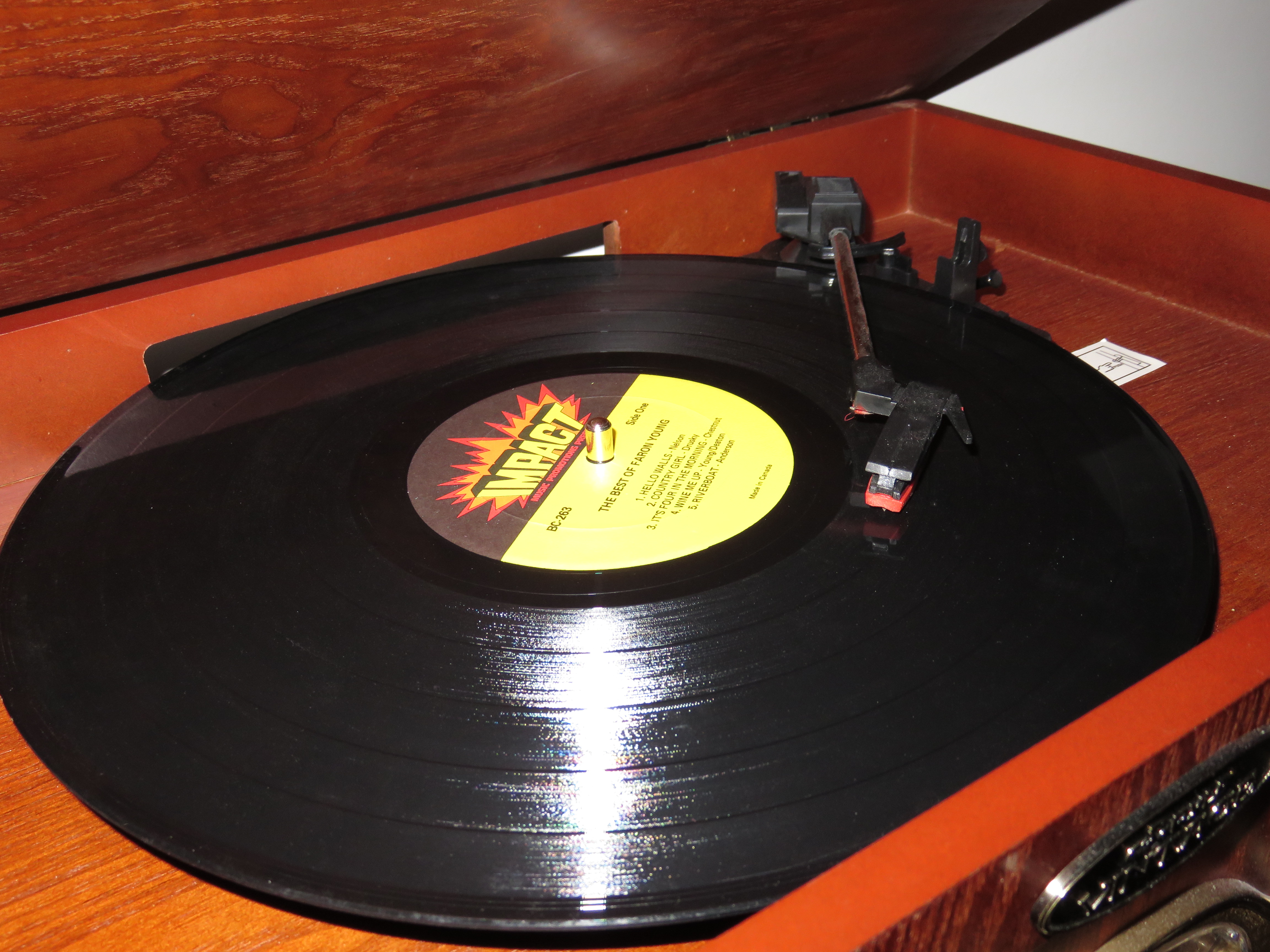
The first album I want to feature in my Find of the Week blog is Young’s 1979 greatest hits album, “The Best of Faron Young.” Here’s my look at the album and what it has to offer:
Found here: Atomic Vintage Store
Format: LP record
Price: $3
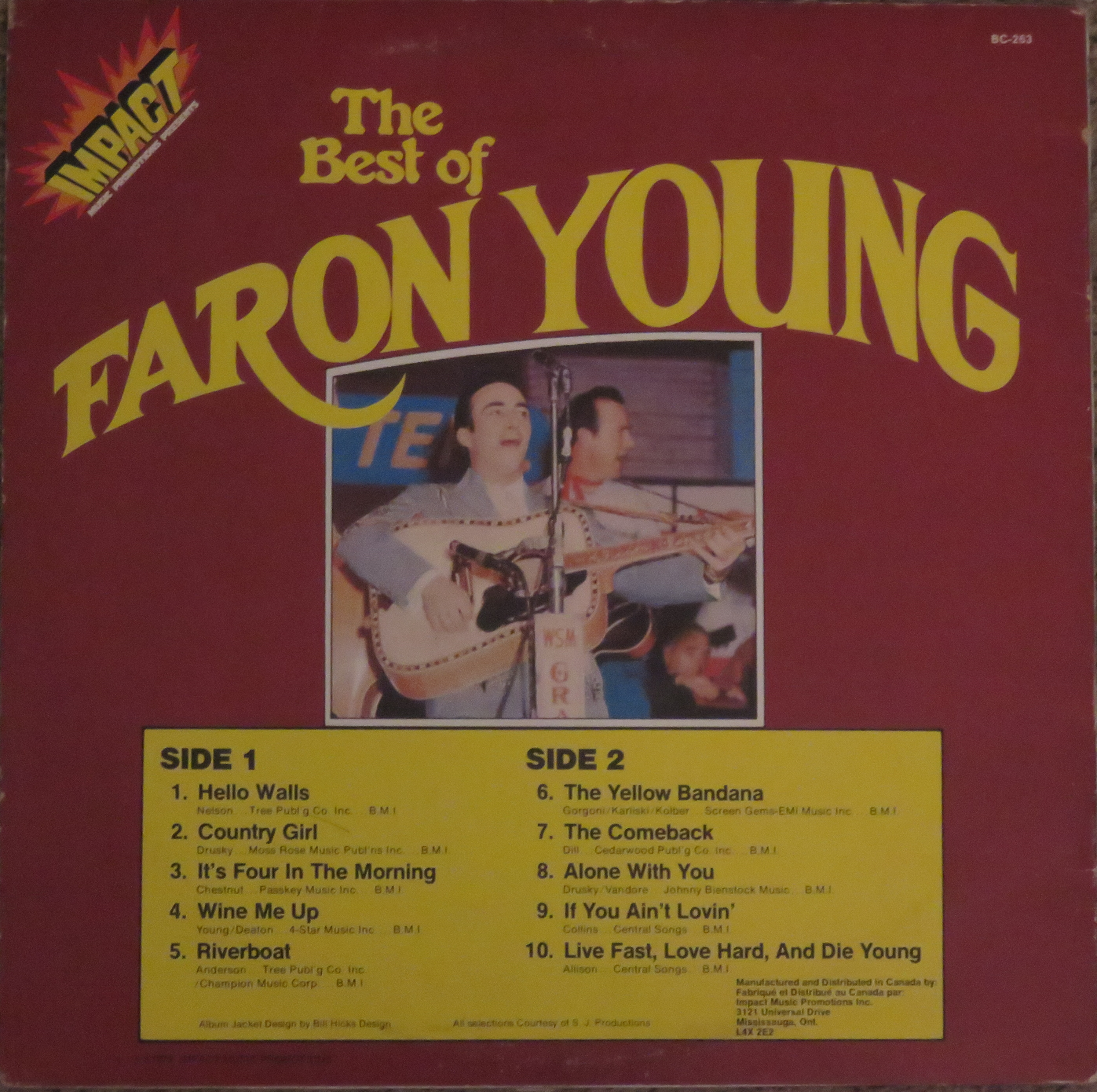
Tracks
Side 1
“Hello Walls”
“Country Girl”
“It’s Four in the Morning”
“Wine Me Up”
“Riverboat”
Side 2
“The Yellow Bandana”
“The Comeback”
“Alone With You”
“If You Ain’t Lovin’”
“Live Fast, Love Hard, and Die Young”
Best Song: “Hello Walls”. It’s not my personal favorite, but it’s by far the biggest and most respected song Young recorded. The song is about a man whose lover has left, leaving him with only his house to console him.
Listening to the lyrics, you can understand why Nelson would cement his career with this one. Just look at the opening lines:
“Hello walls (Hello, hello.) How’d things go for you today?/ Don’t you miss her since she up and walked away?”
It’s a short song that had a lasting impact on both the singer and the songwriter.
Best Line: “I saw more love in her eyes when I left her than most foolish men will ever see/ But it’s four in the morning and once more the dawning just woke up the wanting in me”
This line is from “It’s Four in the Morning”, which is one of my favorites by Young. The song is about a breakup and having mixed emotions on walking away.
The song shows both how talented Young was but why he couldn’t keep up with the changes in country music. This track has a Dean Martin-type feel to them; it’s a style that country singers like Eddy Arnold and Jim Reeves perfected in their heyday. Their voices were really the focus with music being completely secondary, and the stories told in each song usually didn’t involve bar rooms or chasing wild women.
The problem is neither Arnold, Reeves nor Young made this last past the ‘60s and ‘70s.
Look It Up: “Wine Me Up”. The first time I saw Faron Young was on a DVD of “Hee Haw” where he played this song. It’s a fast-paced song with excellent use of the fiddle about a drunk who is overcoming heartbreak with wine. Several people went on to cover this song, including Ernest Tubb, Mel Street, Tanya Tucker and Gary Allan.
Rating: 8.5/10. It’s a safe assumption that a greatest hits album will be a good one if the artist has strong material, and that is the case with Young.
Other songs worth noting are “If You Ain’t Lovin’”, which George Strait turned into a No. 1 hit in 1987, as well as the final track, “Live Fast, Love Hard, and Die Young.” It’s an eerie way to end the album; it’s a song about never slowing down because the singer wants to “Live fast, love hard, die young and leave a beautiful memory.” In truth, Young did leave a beautiful memory; it’s just a shame so many country fans are unaware of it.
I’ll leave you with this backstory and duet with Nelson and Young.
 Jordan D. Hill